News
Norton Fire Reminds Residents to Change Their Clocks, Check Their Alarms as Daylight Saving Time Ends
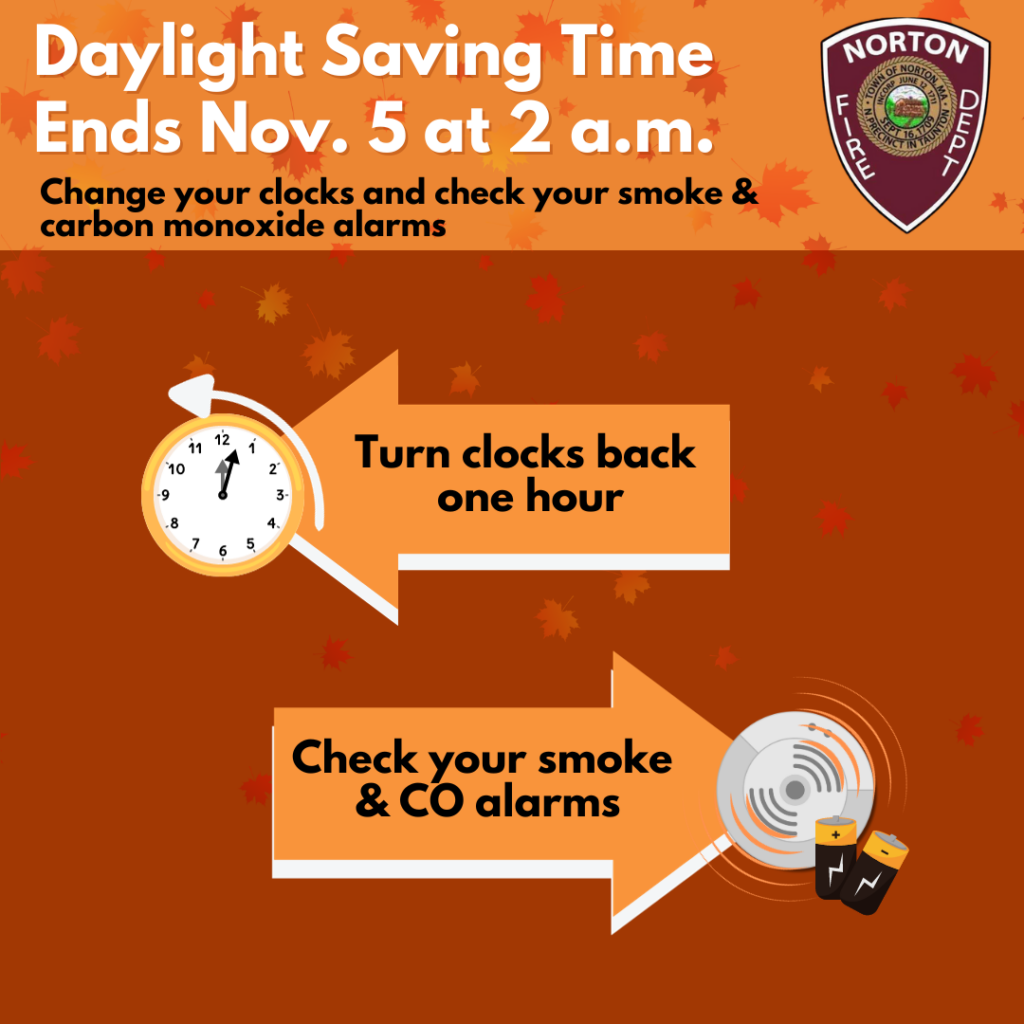
NORTON — Chief Shawn Simmons and the Norton Fire Department would like to remind residents to check their smoke and carbon monoxide alarms when setting their clocks back for Daylight Saving Time this weekend.
Daylight Saving Time ends on Sunday, Nov. 5, at 2 a.m., and clocks will move back one hour at that time.
When changing their clocks in the spring and fall, residents are also encouraged to check their smoke and carbon monoxide alarms. If the alarms take alkaline batteries, residents should change the batteries when changing their clocks. If the alarms are out of date, they should be replaced.
Smoke alarms that are properly installed and maintained are vital in reducing deaths and injuries due to a fire by giving everyone in the home an early warning and time to escape.
According to the National Fire Protection Association (NFPA), from 2014-2018 three out of five home fire deaths resulted from fires in homes with no smoke alarms (41%) or no working smoke alarms (16%). In fires in which the smoke alarms were present but did not operate, two of every five (41%) of the smoke alarms had missing or disconnected batteries.
Residents are encouraged to review the following safety tips, courtesy of the NFPA:
- Test all smoke alarms at least once a month by pressing the test button to ensure the alarm functions properly.
- Smoke alarms with non-replaceable 10-year batteries are designed to remain effective for up to 10 years. If the alarm chirps, warning that the battery is low, replace the entire smoke alarm right away.
- Alarms with any other type of replaceable battery need a new battery at least once a year. When you change your clocks, also replace regular batteries in smoke and carbon monoxide alarms.
- When replacing a battery, follow the manufacturer’s instructions, which specify the batteries (brand and model) that must be used. The smoke alarm may not work properly if a different kind of battery is used.
- Replace all smoke alarms when they are 10 years old. CO alarms should be replaced according to the manufacturer’s instructions.
- Install smoke alarms in every bedroom. They should also be outside each sleeping area and on every level of the home. Install alarms in the basement.
- CO alarms should be installed in a central location outside each bedroom or sleeping area, on every story of the home and in other locations required by standards, codes or laws.
- People who are hard of hearing or deaf can use special alarms. These alarms have strobe lights and bed shakers.
- For the best protection, interconnect alarms throughout the home. When one sounds, they all sound.
- When an alarm sounds, immediately exit the house or building and ensure each person inside the home is accounted for. Call 9-1-1, wait for emergency personnel and stay out of the building.
- Working with each member of the household, create and practice a home escape plan.
- More tips about installing and maintaining smoke alarms can be found here, and carbon monoxide alarms here.
Today’s smoke alarms are more technologically advanced to respond to a multitude of fire conditions, yet mitigate false alarms. Residents are reminded that separate smoke and carbon monoxide alarms are not interchangeable and should never be disconnected.
###
Norton Community Holiday Toy Drive

Norton Fire Department Completing Nero’s Law Training
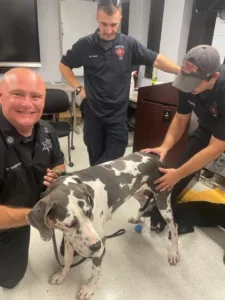
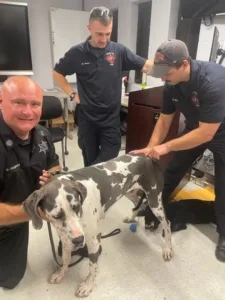
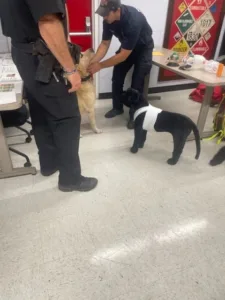
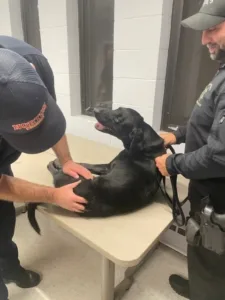
Norton Fire Department Group 3 attended mandatory Nero’s Law training on Wednesday night. Nero’s Law allows EMT’s to treat and transport Police K9’s that have been injured in the line of duty. Thank you to the Plymouth County Sheriff’s department and their officers who assisted with the training of all shifts with Starr, Rusty, and Jack, all working K9’s in law enforcement. A special thanks to Dr. Austin, Dr. Segal, and Dr. Hammond, Critical Care Doctors of Veterinarian Medicine, that donated their time to teach all the members of the Norton Fire Department these important skills.
During Fire Prevention Week Norton Fire Department Urges Residents to Be Aware: ‘Cooking Safety Starts with YOU. Pay Attention to Fire Prevention.’
NORTON — During Fire Prevention Week, which is being recognized this year from Oct. 8 to 14, Chief Shawn Simmons and the Norton Fire Department are sharing important cooking safety tips to help keep residents safe.
Fire Prevention Week is organized by the National Fire Protection Association (NFPA). The goal of Fire Prevention Week is to educate the public about simple but important ways they can keep themselves and those they live with safe.
This year’s theme, “Cooking safety starts with YOU. Pay Attention to Fire Prevention” aims to educate everyone about simple but important actions they can take to keep themselves and those around them safe when cooking.
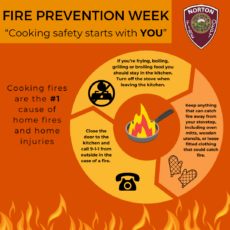
According to the NFPA, cooking fires are the number one cause of home fires and home injuries and unattended cooking is the leading cause of cooking-related fires and deaths.
Norton Fire Department and the NFPA urge all community members to take the following steps to ensure they are cooking safely and are actively preventing cooking fires:
- Cook with Caution: Never use the stove or stovetop if you’re tired or have consumed alcohol.
- If you’re frying, boiling, grilling or broiling food you should stay in the kitchen. Turn off the stove when leaving the kitchen.
- If you’re simmering, baking or roasting food, check it regularly, remain in the home while food is cooking, and use a timer as a reminder.
- Keep anything that can catch fire — oven mitts, dish towels, wooden utensils, food packaging, or curtains away from the stovetop.
- Keep children and pets away from hot food and liquids. The steam or splash from vegetables, gravy, coffee and other food and drink could cause serious burns.
- Be sure electric cords from an electric knife, coffee maker, plate warmer or mixer are not dangling off the counter within reach of a child.
- Keep matches and utility lighters out of the reach of children. They should be kept up high in a locked cabinet.
- Keep the kitchen and dining room floor clear so there is less risk of tripping.
- For a small stovetop fire, smother the flames by sliding a lid over the pan and turn off the burner. Leave the pan covered until it is completely cooled.
- For an oven fire, turn off the heat and keep the door closed. The oven should be checked and/or serviced before being used again.
- Test your smoke alarms and make sure the batteries are replaced if needed.
- Close the door to the kitchen and call 9-1-1 from outside in the case of a fire.
Residents are also reminded of the importance of having large and clearly visible house numbers to help first responders easily find your home. Numbers should be facing the street, should be visible at night and should not be blocked by trees or bushes. Those with long driveways should have house numbers on both sides of a mailbox or sign pole at the end of their driveway near the roadway.
To learn more about Fire Prevention Week, click here.
###
Norton Fire Department Offers Safety Tips, Encourages Residents to Stay Alert as Hurricane Lee Projected to Track Toward New England

NORTON — Chief Shawn Simmons and the Norton Fire Department ask residents to remain alert and take necessary precautions as Hurricane Lee is expected to track toward New England in the coming days.
According to the National Hurricane Center, Lee is moving toward the north-northwest and a turn toward the north is expected by tonight.
Public safety officials are receiving briefings as the situation is updated, and are staying current on storm tracks and forecasts to ensure staffing is in place to deal with any emergency.
Hurricanes can bring many different types of wind and water hazards, including storm surges, strong winds and flooding. The Department of Homeland Security (DHS) and the Federal Emergency Management Agency (FEMA) offer several tips to help residents better prepare for extreme weather:
Know Your Evacuation Zone
Learn if you live or work in a hurricane evacuation zone. If you live in an area that may flood and you may need assistance evacuating, plan with family, neighbors, and friends to determine who may be able to assist. Contact your local public safety officials to make them aware of your needs.
Make an Emergency Plan
Have an emergency plan for how your family would communicate, evacuate, and shelter in place that addresses the needs of all family members, including seniors, children, individuals with access and functional needs, and pets. If you receive medical treatment or home health care services, work with your medical provider to determine how to maintain care and service if you are unable to leave your home or have to evacuate.
Steps to making an emergency plan include:
- Discuss the questions below with your family, friends or household to start your emergency plan.
- How will I receive emergency alerts and warnings?
- What is my shelter plan?
- What is my evacuation route?
- What is my family/household communication plan?
- Consider specific needs in your household.
- Fill out a Family Emergency Plan. A sample plan can be found here.
- Practice your plan with your family/household.
Build an Emergency Kit
Build an emergency kit that will sustain your household for three to five days without power.
A basic emergency supply kit may include the following recommended items:
- Food and water
- Battery-powered or hand crank radio and a NOAA Weather Radio with tone alert
- Flashlight and extra batteries
- First aid kit, including prescription medicine
- Disinfectants, moist towelettes, hand sanitizer, and cleaning supplies
- Whistle (to signal for help)
- Dust mask (to help filter contaminated air)
- Plastic sheeting and duct tape (to shelter in place)
- Moist towelettes, garbage bags, and plastic ties (for personal sanitation)
- Wrench or pliers (to turn off utilities)
- Manual or battery-powered can opener (for food)
- Local maps
- Cell phone with chargers and a backup battery
Preparing at home
- Check flashlights and portable radios to confirm they’re working. Fully charge your cell phone, laptop and any other devices before the storm.
- Check the batteries in smoke and carbon monoxide detectors.
- If you own a car, make sure the gas tank is at least half full should you need to travel.
- Have an emergency food supply in case of a power outage. People should have supplies to sustain their families for at least 72 hours.
- Set your refrigerator and freezer to their coldest settings (remember to reset them back to normal once power is restored). During an outage, minimize the number of times you open the refrigerator or freezer door.
- Prepare your home by securing or bringing in outdoor objects (patio furniture, children’s toys, trash cans, etc.) that could be swept away or damaged during strong winds or flooding. Also, elevate items in your basement in case of flooding, check your sump pump, unplug sensitive electronic equipment, and park vehicles in areas that are unlikely to flood.
- Bring in boats from moorings or add extra lines to secure them. The Harbormaster will not be responding to boats off of mooring until the storm weakens and it is safe for the crews to respond.
- The Massachusetts Emergency Management Agency recommends purchasing a generator to maintain electricity in an outage. NEVER run a generator indoors, in a garage, or with the exhaust facing the home or home air intakes.
- Pack a bag with important items in case you need to evacuate. Don’t forget to include needed medications and any valuable personal belongings.
Should a Weather Event Occur
- Don’t go out during a hurricane or tropical storm, if possible.
- Call 9-1-1 to report emergencies, including downed power lines and gas leaks.
- Stay away from downed utility wires. Always assume a downed power line is live.
- Report power outages to your utility company. Do not call 9-1-1 to report an outage or to ask about power restoration.
- Be a good neighbor. Check on family, friends, and neighbors, especially the elderly, those who live alone, those with medical conditions and those who may need additional assistance.
Stay Informed
Every family should have multiple methods for receiving emergency alerts. Learn more about different types of alerting and information tools including the Emergency Alert System, Wireless Emergency Alerts, NOAA Weather Radio, social and traditional news media, and your local notification systems.
For more information on hurricane planning, click here.
###

Remembering 9.11

Retired Norton Fire Chief George F. Burgess Obituary


Retired Norton Fire Chief George F. Burgess, 84
Dateline: Norton, MA
Retired Norton Fire Chief George F. Burgess, age 84, of Norton, passed away peacefully, in the presence of his loving family on Friday, September 1, 2023 at the Sturdy Memorial Hospital in Attleboro. He was the beloved husband and best friend of the late Deborah A. (Wills) Burgess, to whom he was wed for fifty-nine years at the time of her death on September 19, 2022.
Born in Attleboro, MA on August 4, 1939, he was a loving son of the late Edward L. Burgess and Norma B. (Keene) Story.
George spent his early childhood living in Attleboro. At the age of twelve his family moved to the Chartley section of Norton, where he has made his home ever since. He was a 1957 graduate of Norton High School and served his country as a member of the United States Army Reserve. Chief Burgess loved spending time with his adoring family and friends, especially while relaxing in the beautiful White Mountains of New Hampshire.
Chief Burgess began his career as a Norton Firefighter at the age of fifteen and was appointed fulltime to the department in 1962. He became Fire Chief in 1971 and at the age of sixty-five retired following thirty-three years as Chief. He had a special love for the Community of Norton, especially for the firefighters that worked under his command. In recognition of his many years of faithful service to the people of Norton, Station 2 on East Main Street was named in his honor.
George also served on the Norton Planning Board, was a Charter Member of the Norton Fire Fighters Local 2678, a former president of the Massachusetts Fire Chiefs Association, a member of the Bristol County Fire Chiefs Association, as well as a member of the New England Fire Chiefs Association.
He is survived by his devoted sons: Norton Firefighter Edward L. Burgess and his wife Jane of Norton, Mansfield Fire Captain William H. Burgess and his wife Judy of Norton and retired Norton Fire Lieutenant Andrew V. Burgess and his longtime companion Gena Brasil of Norton. He was the cherished grandfather of Sarah, Emily, Rachel, Kelsie, Meghan, Jacob, Ben, Will, Grace and the great grandfather of Meadow, August and Isabella. He was the dear brother of Joanne F. Lund of Norton and is also survived by his loving nieces and nephews.
Relatives and friends are cordially invited to attend visiting hours with Firefighters Honors on Wednesday, September 6th from 4:00-7:00 P.M. in Saint Mary’s Church, 1 Power Street, Norton.
His funeral service will be held on Thursday, September 7th at 10:00 A.M. in Saint Mary’s Church, Norton. Following the services, a procession will leave for the George F. Burgess Station 2 on East Main Street in Norton for a traditional firefighters last call. Burial will be private.
In lieu of flowers, George’s family has requested that donations in his memory be made to the Norton Firefighters Local 2678, 70 East Main Street, Norton, MA 02766.
Arrangements are under the care and direction of the Norton Memorial Funeral Home, 19 Clapp Street, Norton.
To send his family a message of condolence, please visit www.nortonmemoroail.com
Obituary courtesy Norton Memorial Funeral Home.
Retired Chief George Burgess

The Norton Fire Department regrets to announce the passing of Retired Fire Chief George Burgess. Chief Burgess passed away peacefully this afternoon. Please keep Chief Burgess and the entire Burgess family in your thoughts.
Two Norton Firefighters Graduate from the Massachusetts Fire Academy
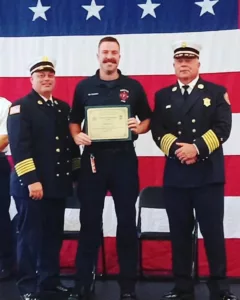
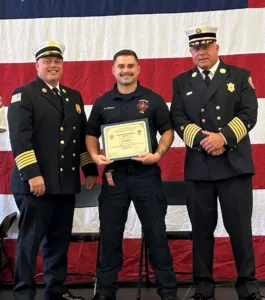
FF Robert Cormier and FF Kyle Cameron both graduated from the Massachusetts Firefighting Academy on August 25, 2023. This 10 week academy taught them the basics of Firefighting, Rescue Techniques, Safety Standards, along with several other topics to prepare them for a career at the Norton Fire Department. Both men start on their respective shifts this week. The Norton Fire Department congratulates and welcomes both of these firefighters back to the Norton Fire Department.